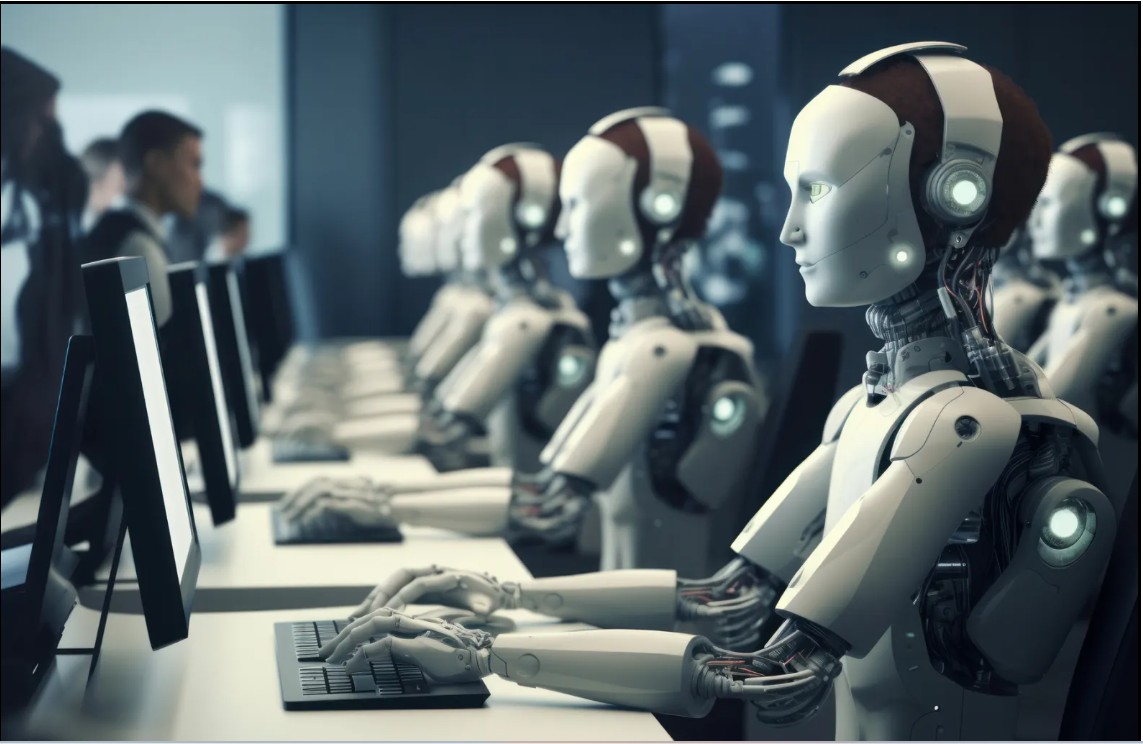
Who pays for mistakes in AI business? Certain insurers carefully increase
As businesses increasingly rely on autonomous artificial intelligence systems to perform tasks and generate revenue, the insurance industry is beginning to adapt by developing policies that cover potential mistakes made by these technologies.
The rise of “agentic AI”—systems capable of independently performing complex digital tasks—has accelerated in recent years, allowing companies to automate operations that were previously handled by human employees. However, the shift has also created new types of risks, particularly when AI systems make errors such as producing fabricated information or taking incorrect actions.
Phil Dawson, head of AI policy and partnerships at specialist insurer Armilla, said the core purpose of advanced AI is often to replace human oversight in decision-making processes. According to Dawson, this shift challenges traditional insurance models that were designed around human accountability.
As companies deploy AI agents capable of acting independently, insurers are being forced to rethink how liability is defined and covered. Errors such as AI “hallucinations”—where systems confidently generate incorrect or fabricated outputs—remain a significant concern despite ongoing improvements in AI technology.
Historically, AI-related risks were not explicitly addressed in insurance contracts and were often included indirectly under existing policies in what experts call “silent coverage”. However, analysts Sonal Madhok and law professor Anat Lior argued in a research paper published by brokerage firm Willis Towers Watson that this approach is likely to change.
They compared the situation to the early days of cybercrime insurance, when insurers initially struggled to define how digital risks should be covered. As AI adoption grows, they expect insurance policies to begin explicitly addressing AI-related liabilities, effectively ending the era of silent coverage.
Some insurers are already shifting away from a wait-and-see approach. Jonathan Mitchell, head of the financial sector practice at brokerage firm Founder Shield, said that several insurance policies now include “absolute AI exclusion” clauses that clearly deny coverage for incidents caused by artificial intelligence systems.
Mitchell noted that in one case a commercial real estate company attempted to insure its AI agent under a standard employee policy but ultimately had to purchase a specialised AI policy instead.
New insurance products are also emerging to address the risks associated with autonomous AI systems. Founder Shield has begun including “AI malfunction and hallucination” scenarios in professional services insurance policies, allowing companies to cover financial losses caused by AI errors.
Such policies can be expanded to include real-world consequences of AI failures, such as a system mistakenly ordering excessive inventory for a company or making operational decisions that result in financial losses.
Armilla, meanwhile, evaluates AI models before providing coverage by testing them for vulnerabilities and reviewing the client’s risk management processes against international standards. Despite this, the company may decline to insure certain applications it considers too risky, including AI used in medical diagnostics or mental health services.
Global insurance and reinsurance company Munich Re has also begun offering insurance coverage both for companies that build AI systems and those that use them.
Michael von Gablenz, head of AI insurance at Munich Re, said that the possibility of AI errors cannot be completely eliminated because AI systems are fundamentally statistical models that inherently contain uncertainty.
Despite the risks, insurers see significant growth opportunities in this emerging market. Von Gablenz believes the potential size of the AI insurance sector could eventually surpass that of cybersecurity insurance.
Research from the Deloitte Center for Financial Services suggests the global AI insurance premium market could reach approximately $4.8 billion by 2032 as businesses continue adopting AI technologies across industries.