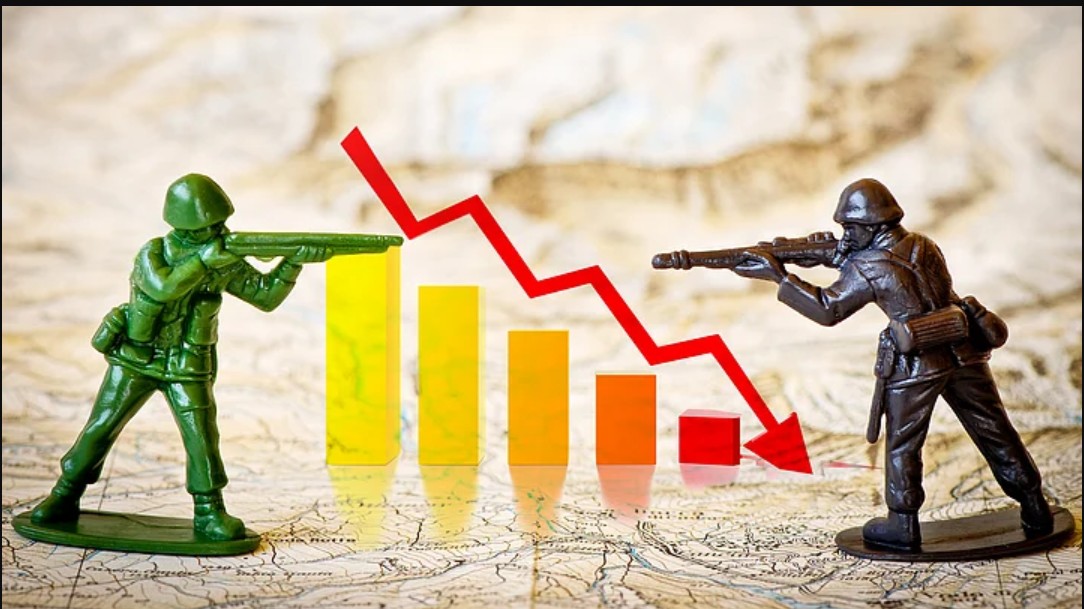
Iran-Israel conflict: AI-affected tech firms worry about spending slowing down
Rising tensions in the Middle East are creating new challenges for India’s IT services sector, which is already dealing with the impact of artificial intelligence. The conflict has raised concerns that technology spending and expansion plans in Gulf countries could slow down.
One major concern is the disruption around the Strait of Hormuz, a key global oil shipping route through which about one-third of the world’s seaborne oil passes. The temporary closure of the route has shaken global energy markets and could lead to higher oil prices. Since about 60% of India’s oil imports come from the Middle East, rising crude prices could slow economic growth in the US and Europe, leading companies to cut discretionary technology spending.
According to Gaurav Vasu, CEO of UnearthInsight, higher oil prices could slow revenue growth across many industries and affect the global economy. He said global technology spending growth may drop to around 4–5%, compared with earlier estimates of 5–7%. Growth for global and Indian IT services could fall to around 2–3% by FY27.
The uncertainty may also slow decision-making and delay technology budgets for companies. Subimal Bhattacharjee said companies such as Tata Consultancy Services, Infosys, Wipro and HCLTech could face disruptions because they have delivery centres and clients across Gulf countries. India’s trade with the region is worth more than $160 billion annually.
Bhattacharjee also warned that if the Strait of Hormuz remains closed, rising energy prices could increase operational costs for IT parks, data centres and manufacturing facilities in India. Companies in the region might pause projects temporarily while focusing on security and operational continuity.
The sector has already faced pressure earlier this year after new AI tools from Anthropic triggered fears about the future of labour-intensive IT services. However, analysts believe the direct impact from the conflict may be limited if the situation improves soon.
Namratha Dharshan from Information Services Group said most IT delivery centres serving European clients are located in countries such as Egypt and South Africa. In the Middle East, many delivery centres are located in the United Arab Emirates, with smaller hubs in Kuwait and Bahrain that mainly serve local companies. Because of this, the immediate impact on global IT revenue may remain small and temporary.
According to ISG data, the Middle East and Africa region accounted for only about 1% of global managed services contract bookings in 2025.
However, the uncertainty could affect India’s Global Capability Centre (GCC) ecosystem. Pareekh Jain of EIIRTrend said companies planning GCC expansions in India may delay their investments if the instability continues, as their priorities may shift to managing risks in the Middle East.
Experts say that while the situation may only have a short-term effect for now, a prolonged conflict or continued disruption to travel and connectivity in the Gulf region could eventually affect IT project delivery and operations.