Dario Amodei of Anthropic explains why startups shouldn't work with Claude
Anthropic chief Dario Amodei has cautioned that AI startups operating merely as “wrappers” around large language models (LLMs) risk losing ground to model providers such as Claude and ChatGPT.
“I would give the advice that a business should establish a moat. You shouldn't be just a wrapper. I would not advise that you just say, ‘Here’s a way to interact with Claude and I’m gonna prompt Claude a little bit,’ or ‘I’m gonna build a little bit of a UI around Claude that doesn't have a moat.’ Then, anyone can eat that revenue,” Amodei said.
By “wrapper,” Amodei was referring to startups that build applications or interfaces on top of foundational AI infrastructure, particularly LLMs, without adding significant defensibility. Companies such as Perplexity AI, led by Aravind Srinivas, have often been described as operating in this category, relying on underlying models developed by other AI firms.
Speaking to Nikhil Kamath on the People by WTF podcast, Amodei acknowledged that companies like Anthropic and OpenAI may eventually build first-party products that directly serve end users — effectively competing with enterprise customers who build on their APIs. “We're not gonna promise never to build first-party products, right? That we should be honest about,” he said.
Despite concerns about LLM providers eroding startup value, Amodei argued that durable moats can still be built through deep domain expertise, regulatory knowledge and strong industry integration. He suggested startups should focus on areas where foundational model companies are unlikely to compete directly or would find it inefficient to operate.
Citing Bio-AI as an example — where artificial intelligence intersects with biotechnology — Amodei noted that while Anthropic provides the underlying API, it lacks the specialised biological expertise required to fully operate in that space. “I happen to be a biologist, but most people at Anthropic aren't biologists. They're AI scientists, product people or go-to-market people. So, it's just really inefficient for us to step in that space and do all that work,” he said.
Amodei also pointed to financial services as a potential area for coexistence between AI startups and model providers, though he added that Claude already has specialised offerings tailored for the sector.
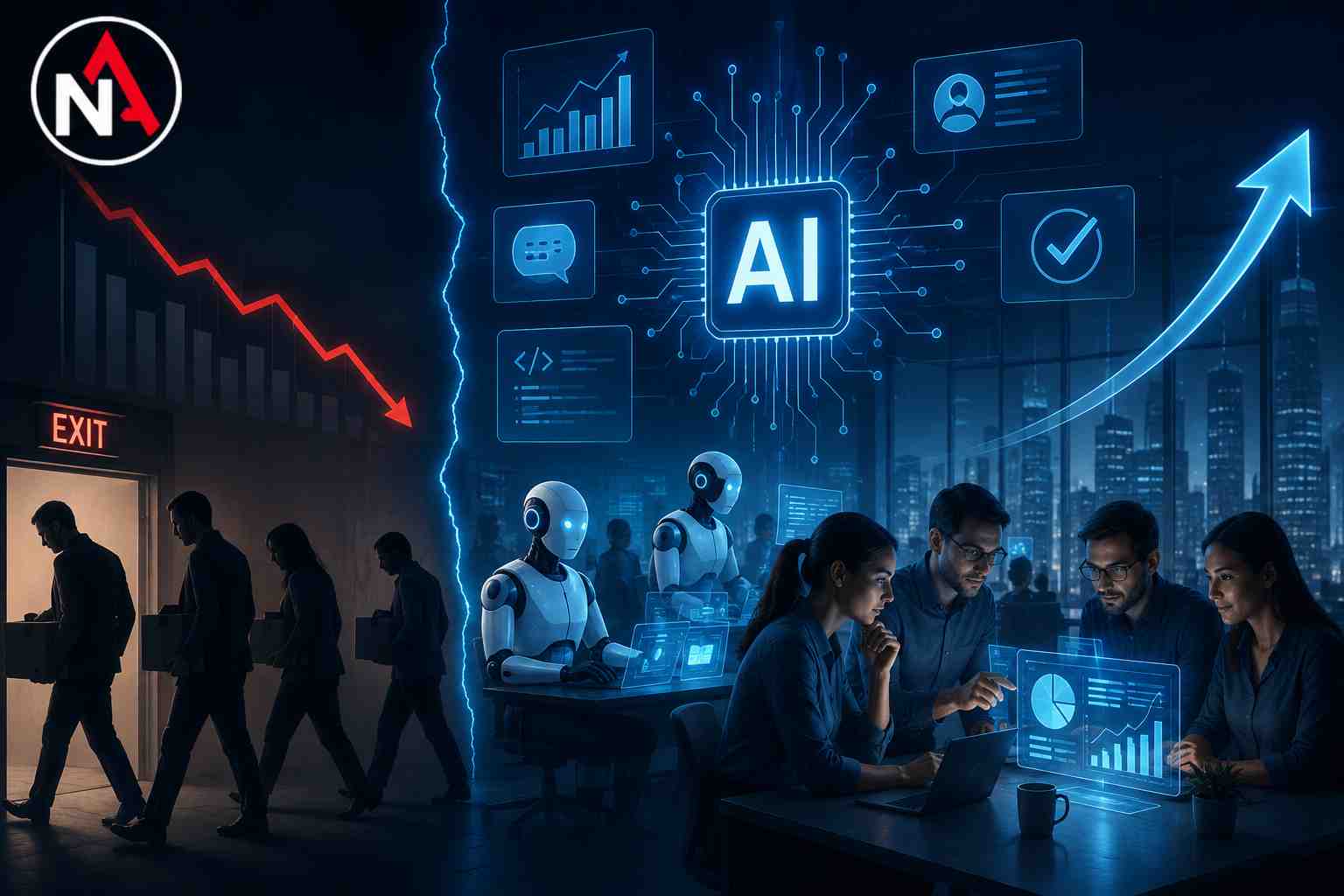
On broader industry impact, Amodei said AI is likely to automate niche cognitive tasks such as coding before replacing more complex functions. “Coding goes away first. Engineering takes longer,” he said, suggesting that tasks involving intricate design, institutional navigation and relationship management would be more resistant to immediate automation.