Discover how ERP solutions for manufacturing help businesses streamline production, manage inventory, reduce costs, and improve operational efficiency. Learn why modern manufacturers are adopting ERP systems from New Age IT Hub.
ERP Solutions for Manufacturing: Why Smart Manufacturers Are Leaving Legacy Systems Behind
In today's competitive manufacturing landscape, success depends on more than producing quality products. Businesses must manage production schedules, inventory, procurement, finance, quality control, and customer expectations while maintaining profitability. Relying on disconnected spreadsheets or outdated software often creates operational delays, data inaccuracies, and higher costs.
Modern ERP (Enterprise Resource Planning) solutions have become the foundation of efficient manufacturing operations by connecting every department through a single intelligent platform. Instead of managing information across multiple systems, manufacturers gain real-time visibility into every stage of production, helping them make faster and more informed decisions.
The Challenges Manufacturers Face
Manufacturing companies deal with complex operations every day. Raw material shortages, production delays, inventory mismatches, equipment downtime, and communication gaps can significantly impact productivity and profitability.
Common challenges include:
- Lack of real-time production tracking
- Manual inventory management
- Delayed procurement processes
- Inefficient workforce planning
- Difficulty generating business reports
- Limited visibility into operational performance
These issues often lead to increased operational costs and missed business opportunities.
How ERP Solutions Transform Manufacturing
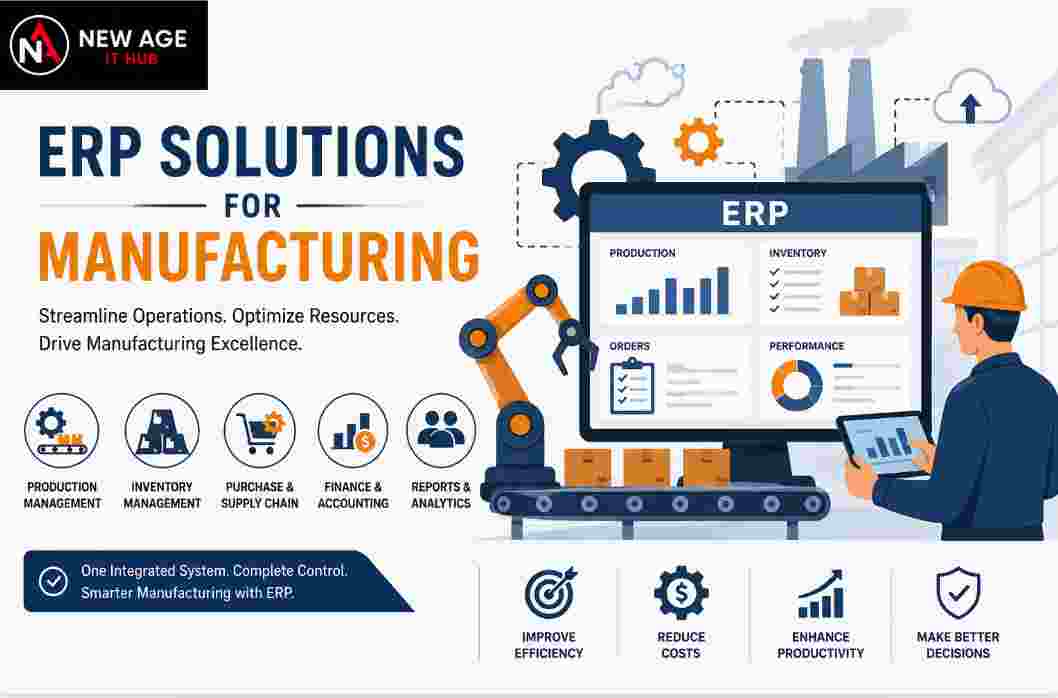
A manufacturing ERP system integrates multiple business functions into a centralized platform. Instead of separate applications for inventory, purchasing, finance, and production, everything works together with synchronized data.
An advanced ERP solution enables manufacturers to:
- Monitor production in real time
- Track raw materials and finished goods
- Automate procurement workflows
- Manage suppliers efficiently
- Improve production planning
- Reduce inventory wastage
- Generate instant management reports
- Improve customer order fulfillment
With accurate business intelligence available at every level, organizations can respond quickly to market demands while maintaining operational efficiency.
Benefits of Modern ERP Software
Implementing an ERP system delivers measurable business value across manufacturing operations.
Improved Productivity
Automation eliminates repetitive manual tasks, allowing employees to focus on strategic activities rather than paperwork.
Better Inventory Control
Real-time inventory visibility reduces stock shortages, overstocking, and unnecessary procurement expenses.
Higher Production Efficiency
Production planning becomes more accurate with better scheduling, machine utilization, and resource allocation.
Financial Transparency
Integrated accounting provides complete visibility into operational costs, budgets, profitability, and cash flow.
Data-Driven Decision Making
Interactive dashboards and analytics help business leaders identify trends, monitor KPIs, and improve overall performance.
Why Custom ERP Solutions Matter
Every manufacturing business operates differently. Standard ERP software may include unnecessary features while missing critical business-specific requirements.
Custom ERP development provides:
- Industry-specific workflows
- Role-based dashboards
- Custom production processes
- Flexible reporting
- Third-party software integration
- Cloud accessibility
- Scalable architecture for future growth
A customized ERP platform grows alongside the business, ensuring long-term flexibility without disrupting existing operations.
The Future of Manufacturing ERP
Emerging technologies such as Artificial Intelligence (AI), predictive analytics, Industrial IoT, and cloud computing are making ERP platforms more intelligent than ever. Modern ERP systems can forecast demand, identify production bottlenecks, predict maintenance requirements, and provide actionable insights that improve business performance.
Manufacturers investing in digital transformation today are building a stronger foundation for future growth, operational excellence, and sustainable competitiveness.